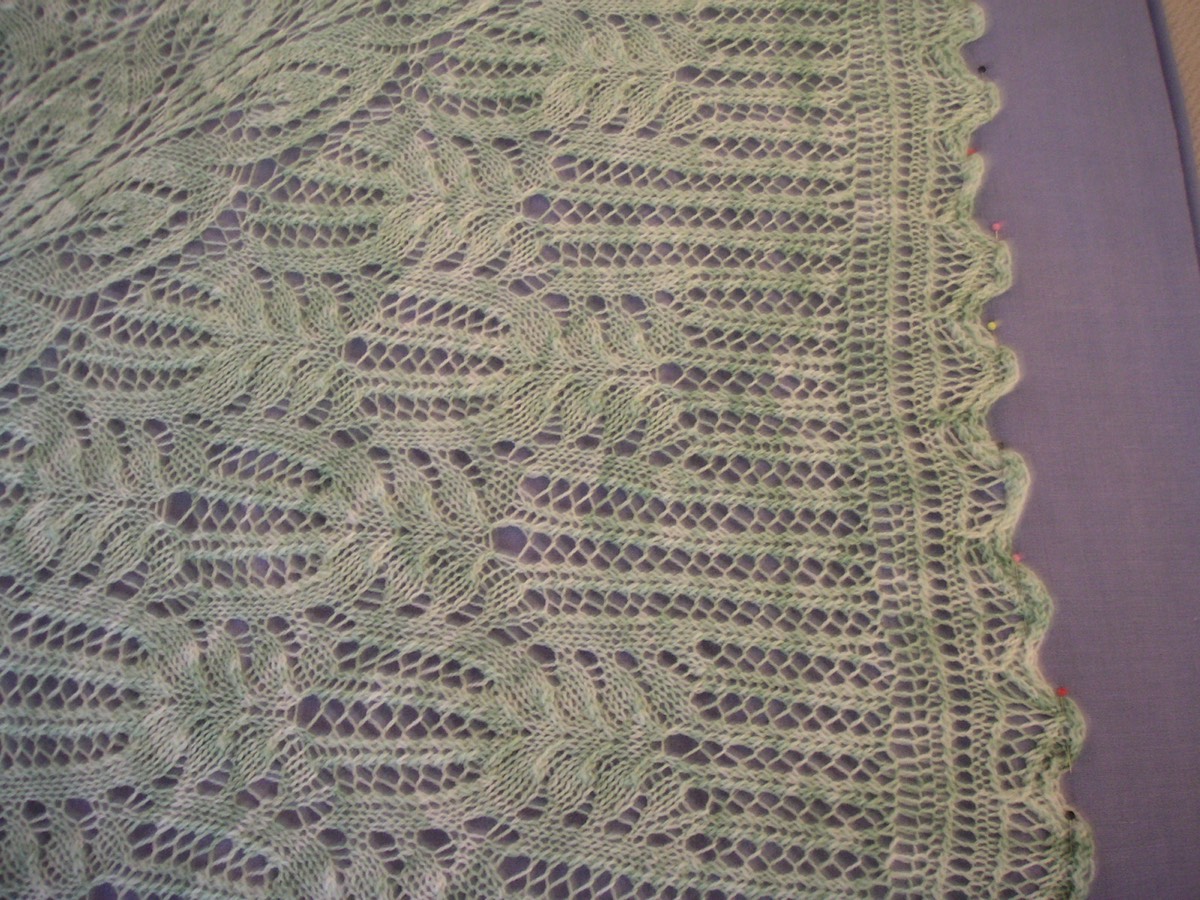

Wool has a well-known blocking routine: cool water, gentle soap, pin and dry flat. Cotton and acrylic do not respond the same way. Cotton can be wet blocked, but it is heavy and may grow. Acrylic has limited blocking and is sensitive to heat.
The care label is the first instruction. The fibre behaviour is the second.
Cotton
Cotton can be washed and wet blocked, but the weight of the water matters. Support the piece with both hands when lifting it, squeeze rather than wring, and roll it in a towel before pinning.
- Wash in cool or lukewarm water with a gentle detergent, following the label.
- Rinse and squeeze gently. Do not twist.
- Roll in a towel to remove excess water.
- Pin to the finished measurements on a flat surface.
- Dry flat, away from direct heat. Do not hang a wet cotton garment; it will stretch.
Cotton often grows after washing, especially in a loose gauge. Measure the swatch after washing and compare it with the pre-wash gauge. If the fabric grows by a stitch per 10 cm, recalculate the finished size or adjust the pattern.
Acrylic
Acrylic is a synthetic fibre. Water alone does little to relax it, and heat can change it permanently. Wet blocking may even the stitches slightly, but it will not open lace like wool.
- Wash according to the label, usually cool and gentle.
- Squeeze gently and roll in a towel.
- Shape the piece flat and let it dry. Pinning has limited effect; do not stretch hard.
- If you use steam, test on a swatch first. Hold the iron above the fabric or use a pressing cloth; never press directly with a hot iron.
Heat can relax acrylic permanently. A hot iron or a hot tumble dryer can flatten the texture or distort the shape, and the change may not be reversible.
Blends
A cotton–acrylic or wool–acrylic blend follows the most delicate fibre. If one component is heat-sensitive, keep the iron away. If one component grows in water, support the garment and dry it flat. When in doubt, wash and block a swatch before treating the finished piece.
A worked example
A cotton swatch measures 20 stitches per 10 cm before washing and 19 after. On a 100 cm body, that is a difference of about 5 cm — enough to change the fit.
An acrylic swatch may barely change after washing. If the pattern depends on blocking to open a lace repeat, acrylic is the wrong fibre for that project; if the pattern is a simple stockinette garment, washing and flat drying may be enough.
Cautions
- Do not iron acrylic directly. Use steam above the fabric or a pressing cloth, and test first.
- Do not hang wet cotton. The weight stretches the garment.
- Test for colour bleed, especially with saturated cotton dyes.
- Do not assume “machine washable” means “shape stable”. Cotton can shrink or grow; acrylic can relax with heat.
- Read the label. Blends and finishes change the rules.
Test the swatch first
Before washing the finished piece, wash the swatch with the same water temperature and detergent. Measure it after drying. If the cotton grows or the acrylic changes under steam, you will see the effect on a small piece rather than on the finished garment.
Limits
Blocking is not a repair for a gauge that is wrong. If the fabric is too tight or too loose, blocking will not fix the fit. Use the swatch to check both gauge and fibre behaviour before committing to the finished piece.
Check the fibre method, then the yarn library for how a blend is likely to behave.