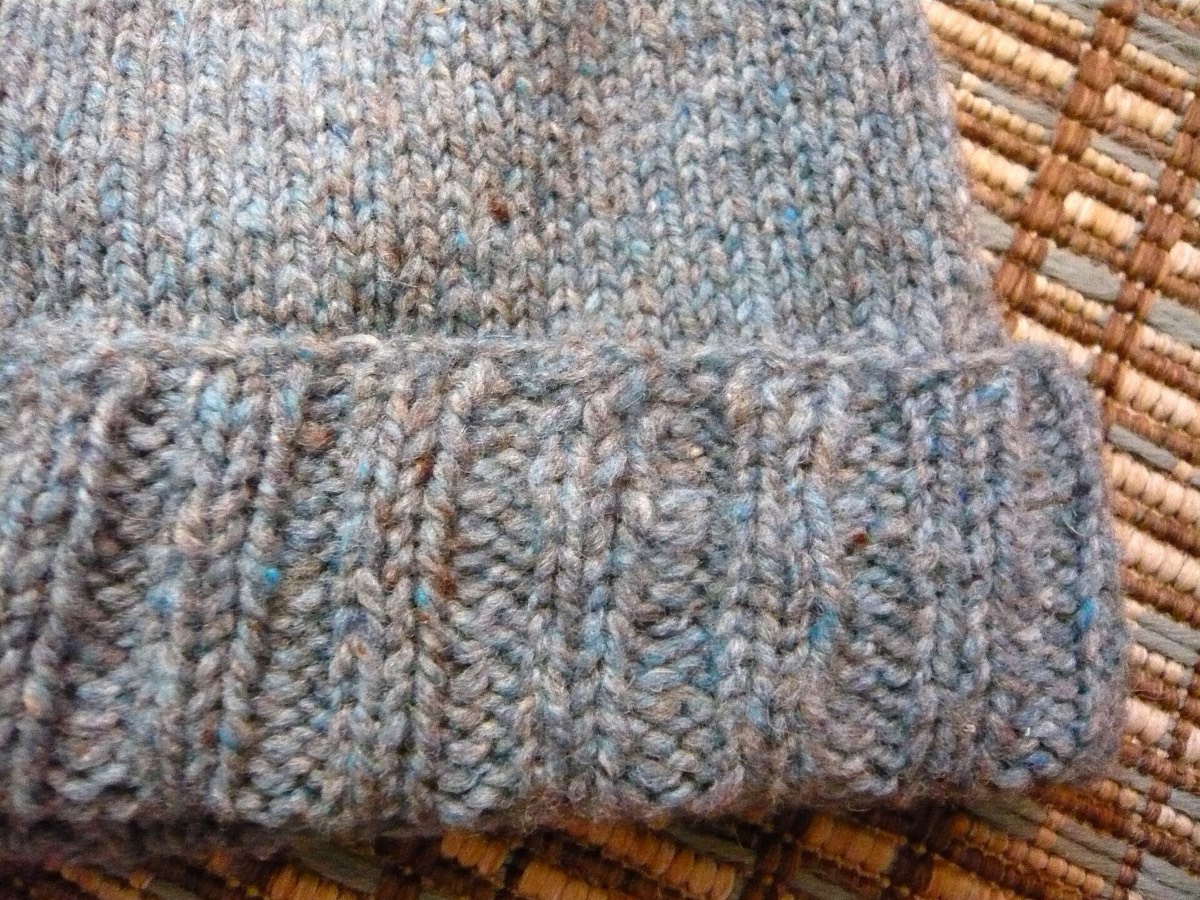

Blocking is washing with intent. For wool, it evens the stitches, softens the fibre and lets lace open to its finished size. It is also the step that reveals whether your gauge was right: the fabric you measured on the needles is not always the fabric you get after water.
Check the care label first. “Hand wash” and “dry flat” are blocking instructions as much as cleaning instructions.
What you need
- A basin or clean sink.
- Cool water and a wool wash or a small amount of gentle detergent.
- Clean towels.
- Blocking mats or a clean, dry surface.
- Rustproof pins and a tape measure.
The sequence
- Fill the basin with cool water. Add the wool wash and mix gently.
- Submerge the piece. Press it under the water; do not agitate, rub or wring. Let it soak for 15–20 minutes.
- Lift, don't pour. Support the piece with both hands and let the water drain. Do not hold it by one corner; wet wool stretches.
- Squeeze gently. Press the water out between your palms or against the side of the basin. Do not twist.
- Roll in a towel. Lay the piece on a clean towel, roll it up and press to remove more water.
- Pin to measurements. Lay it on mats and pin the edges to the finished measurements. Use the schematic, not guesswork.
- Dry flat. Keep it away from direct heat and sunlight. Turn it once if the surface underneath stays damp.
Why wool responds
Wool fibres have scales and memory. Water and a gentle wash let the fibres relax and the stitches settle; the fabric blooms and the surface becomes more even. Lace can open dramatically because the yarn can move into the spaces between stitches.
Superwash wool behaves differently: the scales are treated, so it is less likely to felt but can stretch more in water. Support it carefully and dry it flat.
A worked example
A swatch measures 20 stitches per 10 cm before washing and 19.5 after. On a 100 cm body, that is a difference of about 2.5 cm — enough to change the fit.
This is why gauge is measured after blocking. If the blocked gauge is different, recalculate the cast-on or adjust the finished measurements before knitting the real piece.
Cautions
- Hot water and agitation can felt wool. Keep the water cool and do not rub.
- Do not wring or hang. Wet wool stretches under its own weight.
- Test for colour bleed. Dark or saturated colours can release dye; wash separately or use a colour catcher.
- Do not iron directly. If you need steam, hold the iron above the fabric and use a pressing cloth.
- Read the label. Some wool blends have different care instructions.
Wet blocking vs steam
Wet blocking is the default for wool: it relaxes the fibre and lets the fabric settle. Steam can be useful for a small adjustment or a textured stitch that should not be flattened, but it does not replace washing. If you use steam, hold the iron above the fabric and let the steam penetrate; do not press.
Dry the piece flat and check it once or twice while it dries. Edges can curl as they dry; smooth them into the pinned shape rather than re-pinning aggressively. Remove the pins only when the fabric is completely dry, or the shape will relax back.
Limits
Not every wool garment needs full wet blocking. Socks and textured stitches may only need a gentle wash and shaping; lace usually benefits from pinning. The fibre blend and the care label decide the method, not a generic rule.
For the fit check see measuring ease; for the measurement see gauge.