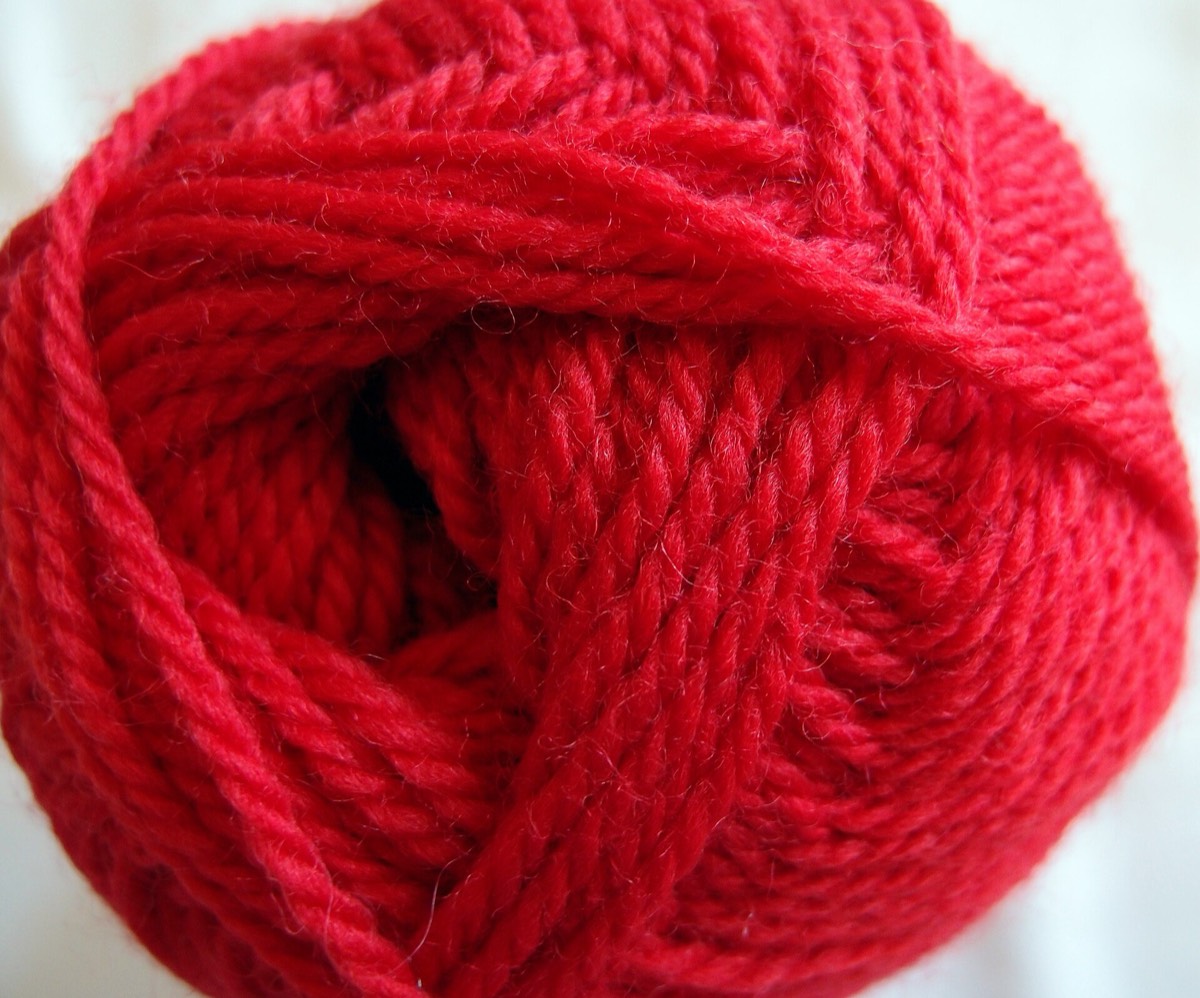

Two yarns can carry the same weight number, the same fibre and the same metres per 100 g, and still produce different fabric. One may show every cable crisply; the other may blur the same cable into a soft ridge. The difference is usually structure: how many plies the yarn has, how tightly it is twisted, and how the fibre was prepared before spinning.
Length still decides quantity. Structure decides whether the substitute behaves like the original.
Ply and spin, briefly
- Singles. One strand of fibre, twisted. Soft and drapey, often hairy, and usually weaker than a plied yarn.
- 2-ply. Two strands twisted together. Soft, slightly irregular, good for lace and drapey fabrics.
- 3-ply and 4-ply. More strands make a rounder, stronger, more regular yarn. Stitch definition improves.
- Chainette. A chain-like structure rather than a twisted rope. Light, elastic and often low-halo.
- Woollen spun. Fibres are carded and spun with air between them. Warm, fuzzy, haloed, less crisp.
- Worsted spun. Fibres are combed parallel before spinning. Smooth, dense, good stitch definition.
“4-ply” is also used as a weight name in some countries, especially for fingering-weight sock yarn. On a label it may not mean four literal plies. Read the description, not just the name.
What structure changes
| Structure | Fabric | Best for | Watch for |
|---|---|---|---|
| Singles | Soft, haloed, drapey | Shawls, loose garments | Weak spots, pilling |
| 2-ply | Soft, slightly irregular | Lace, drapey knits | Less durability |
| 3-ply / 4-ply | Round, regular | Socks, garments, cables | Can feel denser |
| Chainette | Light, elastic, low halo | Lightweight garments | Different gauge behaviour |
| Woollen spun | Warm, fuzzy, bloom | Winter knits, colourwork | Blurred stitch definition |
| Worsted spun | Smooth, dense, crisp | Cables, lace, colourwork | Less warmth for weight |
Gauge can move without the weight changing
A rounder, denser yarn can knit at a slightly different gauge from a soft, airy yarn at the same stated weight. The fibres pack differently, and the stitch shape changes. Swatch the substitute in the actual pattern, then wash it. A yarn that looks correct on the ball can relax or bloom after washing.
A worked example
Two substitutes both offer 200 m per 100 g. One is a soft 2-ply woollen-spun yarn; the other is a round 4-ply worsted-spun yarn. The metres match, so the quantity calculation is the same.
Knit a cable swatch in each. The worsted-spun swatch shows the cable as a defined ridge; the woollen-spun swatch softens it into a haloed band. The difference is not a mistake in the pattern — it is the structure doing what it does.
If the pattern depends on crisp stitch definition, the 2-ply is the wrong substitute even though the length matches. If the pattern is a drapey shawl, the 2-ply may be the better choice.
How to choose a substitute
- Match the length first. Structure does not change how many metres the fabric needs by much; it changes the fabric.
- Match the gauge band. Stay within one weight category where possible.
- Match the structure if stitch definition matters. Cables, lace and colourwork are structure-sensitive.
- Swatch the pattern. A stockinette swatch cannot show how a cable or a float will behave.
- Check the fibre. A structural match in the wrong fibre can still drape or pill differently.
When structure matters most
- Cables and twisted stitches. Round, plied yarns show the crossings; soft singles blur them.
- Lace. Smooth, high-twist yarns open cleanly; haloed yarns fill the holes.
- Colourwork. Smooth yarns keep the edges of each colour crisp.
- Socks and hard-wearing items. More plies and higher twist usually mean more durability.
- Drapey shawls. Singles and 2-ply yarns can be an advantage, not a compromise.
Limits
Labels often do not state ply count, spinning method or twist. A yarn described as “soft” may be woollen-spun or a brushed worsted; the description is not a specification. Use the manufacturer's details where available, and let a swatch settle the question.
Match the ply and spin before trusting the weight band; the yarn library lists comparable structures.