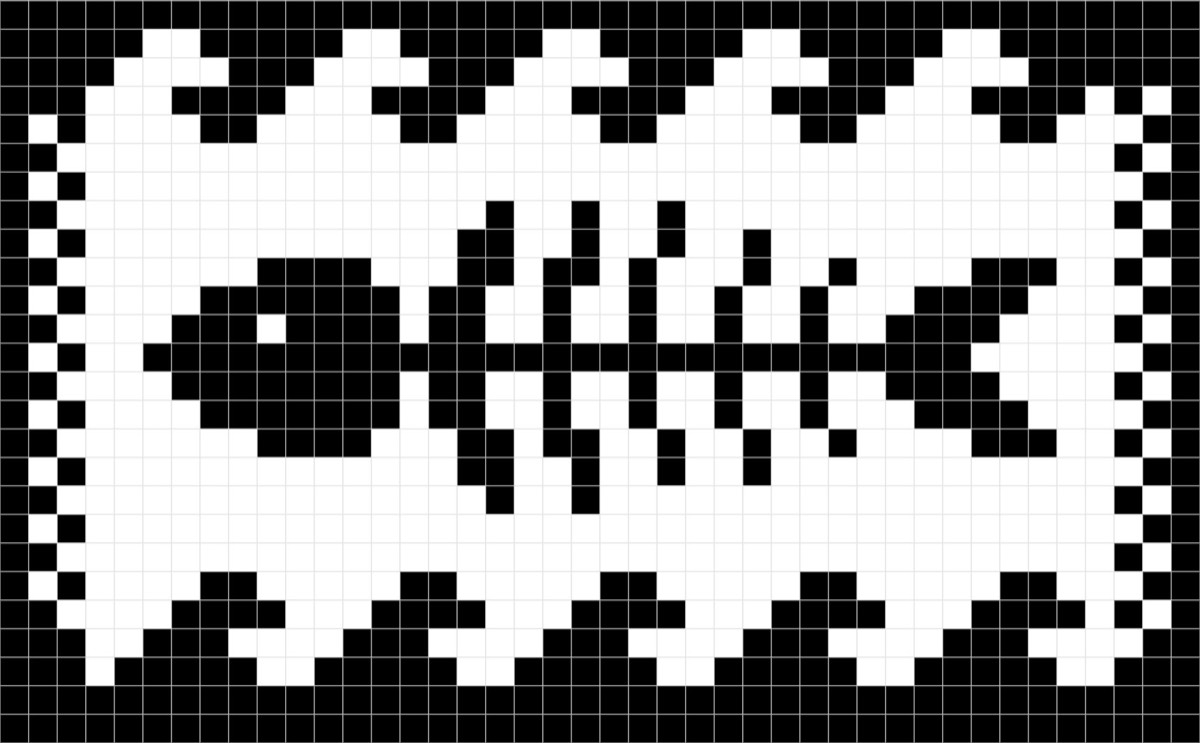

A crochet chart is a picture of the stitches. Each symbol represents a stitch, the symbols are arranged in rows or rounds, and the shape of the chart is the shape of the fabric. Once you know the legend, a chart can be faster than written instructions — especially for lace, colourwork and shaped motifs.
The chart does not replace the written pattern entirely. It usually gives the stitch placement; the written text gives the turning chains, the repeats and the finishing.
Find the legend
Every chart should have a key. Common symbols include a small oval for a chain, a cross or plus for single crochet, a T with one stroke for half double crochet, a T with two strokes for double crochet, and a cluster or shell symbol for multi-stitch groups. Symbols vary between publishers, so read the legend rather than guessing.
Work out the direction
- In rows: right to left on the right side, left to right on the wrong side. The row numbers are usually at the side.
- In rounds: start at the centre and work outward. For right-handed crocheters, the round usually travels counterclockwise; the chart may show the start marker.
- Filet crochet: a grid of filled and open squares, read from the bottom up, often alternating direction by row.
If the chart does not state the direction, the row or round numbers usually make it clear.
Count the repeats
Charts often show a repeat box or a shaded section. Work the stitches inside the repeat as many times as the pattern says, then work the stitches after the repeat. The chart may show only one repeat and leave the rest to the written instructions.
A worked example
A simple amigurumi chart starts with a magic ring and six single crochet. Round 1: 6 sc. Round 2: 2 sc in each stitch (12). Round 3: (1 sc, 2 sc in next) six times (18). The chart shows the increases as two symbols in one stitch; the written pattern gives the same sequence.
If you follow only the chart, count the symbols in each round and compare with the written stitch count. If they differ, trust the written count and check the chart's legend.
Common mistakes
- Reading a round in the wrong direction, which reverses the increase placement.
- Missing the turning chain at the start of a row, which shifts every stitch.
- Treating a cluster or shell symbol as a single stitch when it represents several.
- Forgetting that a chart may show the right side only; wrong-side rows can be different.
- Counting the symbol for a chain space as a stitch.
Charts and gauge
A chart assumes a gauge. If your stitch height or width differs, the finished shape changes even if you follow every symbol. Swatch the stitch pattern and check the gauge before working a large chart.
Keep your place
Use a sticky note, a magnetic board or a highlighter to mark the current round. A chart with many repeats is easy to misread after a break. If you put the work down mid-round, note the last symbol you worked rather than the row number.
If the chart and the written pattern use different terms, follow the legend in the chart and the stitch counts in the text. Do not mix US and UK crochet terms; a UK double crochet is a US single crochet.
Limits
Some publishers use symbols inconsistently, and some charts omit the starting chain or the join. Use the written instructions as the authority for construction and the chart as a visual map. If the two disagree and there is no errata, contact the publisher or choose a clearer pattern.
Match the symbol to the stitch, then check the gauge with the crochet gauge guide.