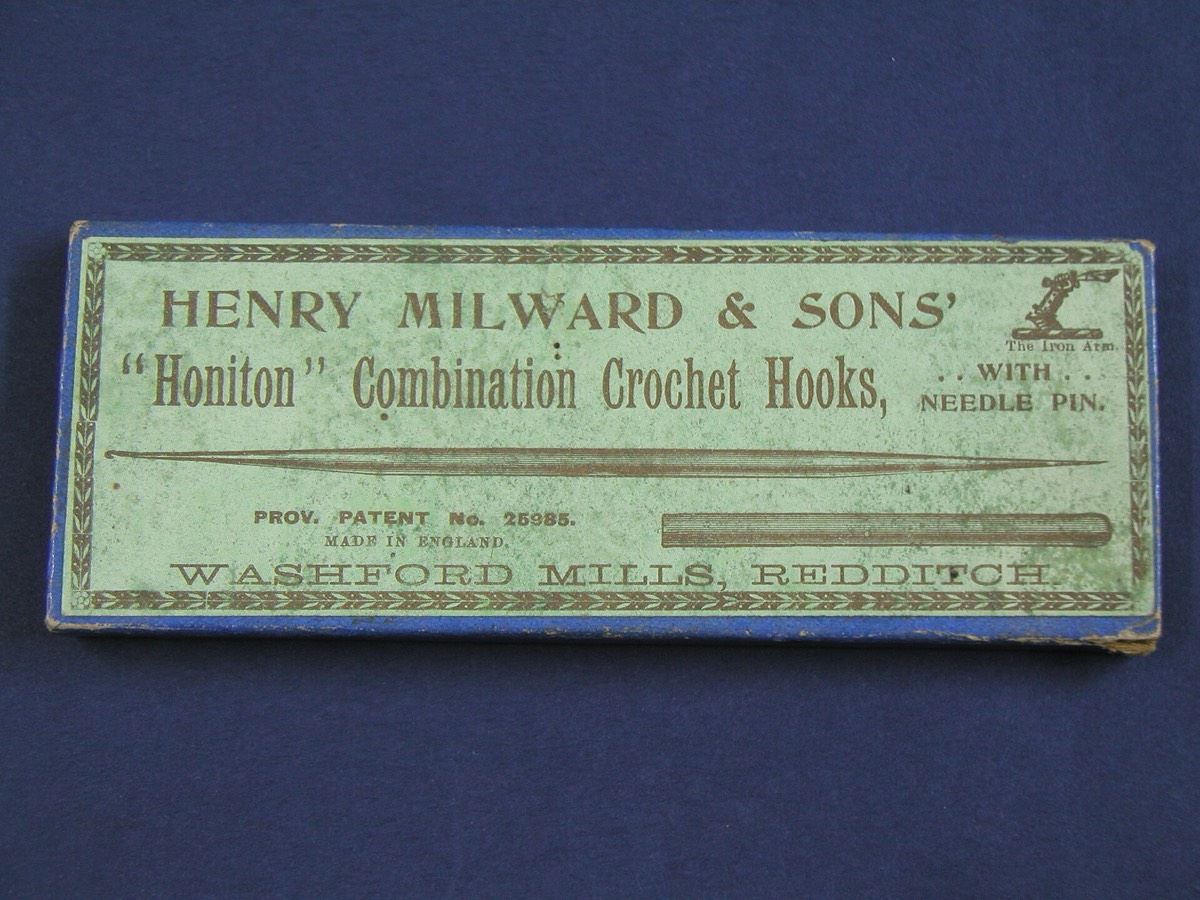

Steel crochet hooks are sized in reverse: a higher number is a smaller hook. They also use a different scale from regular crochet hooks, which is why a “size 7” steel hook is not a 7 mm hook.
This matters most with crochet thread. A thread pattern may call for a steel hook 7 or 8, and using the regular hook chart would give you a hook several times too large.
The steel hook chart
| US steel size | Metric |
|---|---|
| 14 | 0.90 mm |
| 13 | 0.95 mm |
| 12 | 1.00 mm |
| 11 | 1.10 mm |
| 10 | 1.15 mm |
| 9 | 1.25 mm |
| 8 | 1.30 mm |
| 7 | 1.40 mm |
| 6 | 1.50 mm |
| 5 | 1.60 mm |
| 4 | 1.75 mm |
| 3 | 1.90 mm |
| 2 | 2.10 mm |
| 1 | 2.25 mm |
| 0 | 2.50 mm |
| 00 | 2.70 mm |
The smallest steel hook is a 14 at 0.90 mm; the largest is a 00 at 2.70 mm. The metric size is the reliable number, as with knitting needles.
How to read a thread pattern
Crochet thread is also numbered, but in the opposite direction: a higher thread number is finer. Common sizes include 10, 20, 30 and 40. A pattern usually names both the thread and the hook, for example “size 10 thread with a steel hook 7”.
If a pattern gives only a thread size, use the manufacturer's suggested hook range as a starting point and swatch. Thread tension varies, and the finished fabric should match the pattern's gauge, not just the label.
A worked example
A pattern says “steel hook 7”. That is 1.40 mm. A regular 7 mm hook is five times the diameter; it is not a substitute.
A regular B-1 hook is 2.25 mm. The steel hook 1 is also 2.25 mm, which is where the two scales briefly meet. Above that, regular hooks continue with letters and numbers; steel hooks stop at 00.
Why the sizes run backwards
The steel scale descends from 00 (largest) to 14 (smallest). The regular hook scale is not a simple number sequence either: it mixes letters and numbers, and manufacturers vary. This is why the Craft Yarn Council advises makers to rely on the millimetre size printed on the package.
Gauge still matters
Two crocheters using the same thread and the same labelled hook can produce different gauges. Swatch the pattern, wash the swatch if the finished item will be washed, and measure the stitch height and width the pattern specifies. A thread pattern can be more gauge-sensitive than a bulky-yarn project because the stitches are small.
Check a hook you already own
If the size marking has worn off, measure the shaft with calipers, not the hook at the throat. Compare the millimetre measurement with the steel chart. A hook that measures 1.4 mm is a steel 7, even if the handle says something else.
Thread tension
Thread projects are often worked tightly, and a small change in tension shows up quickly. Make a swatch in the pattern's stitch and measure the stitch height and width. If the fabric is too tight, go up one steel size (a lower number); if it is too loose, go down one (a higher number).
The thread number and the hook number are separate variables. A finer thread does not automatically need a larger steel hook; the pattern's gauge and the desired fabric decide. If you substitute a different thread, swatch again rather than reusing the old hook.
Limits
Metric sizes are the reliable comparison, but manufacturing tolerances still vary. If a vintage pattern gives a steel size with no metric equivalent, convert to the nearest metric hook and swatch. Do not assume the old size maps perfectly to a modern hook.
Check the hook size against the thread, and use the converter for the metric/US equivalent.