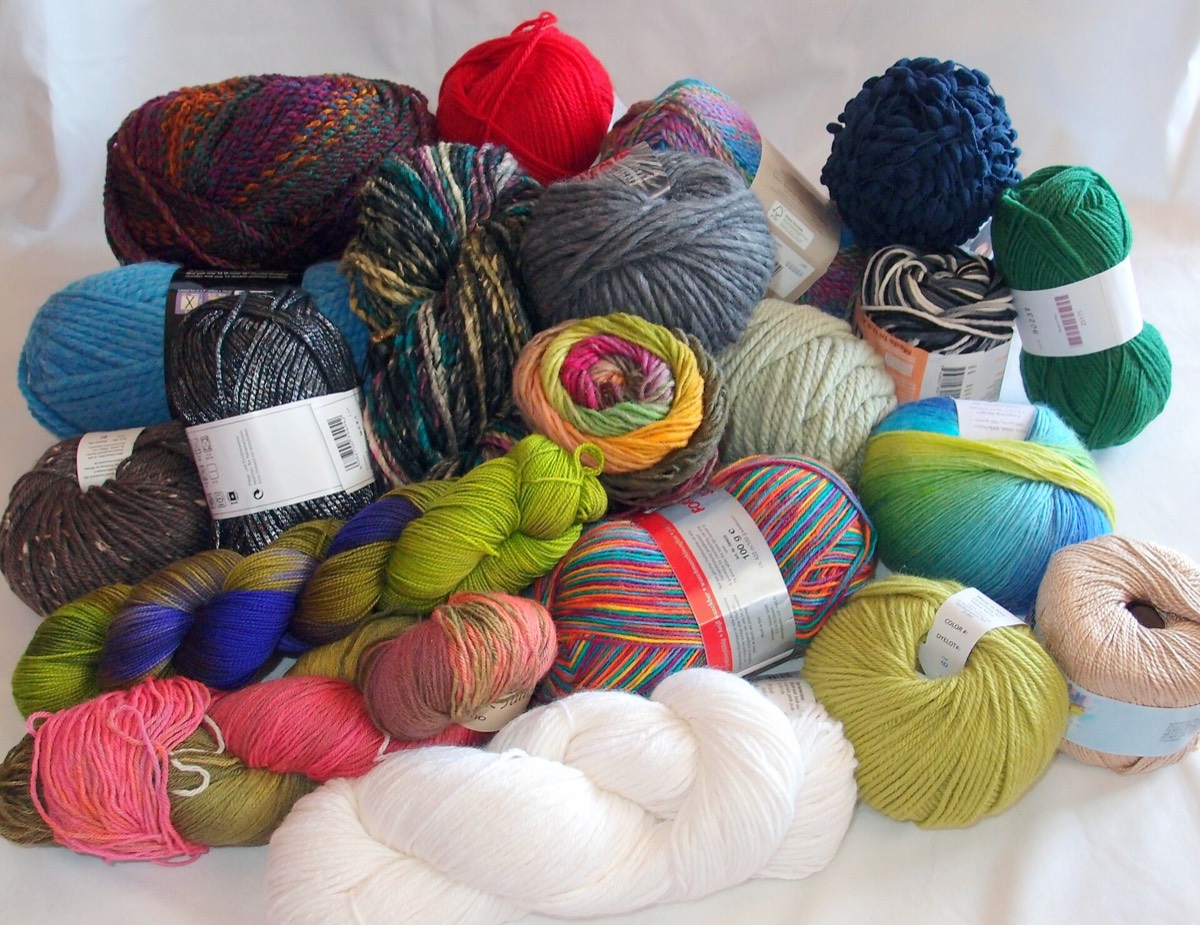

Acrylic and wool are the two most common sweater yarns, and they are not interchangeable in the way the weight label suggests. Acrylic is durable, washable and inexpensive. Wool is breathable, warm and has memory. The right swap depends on what the garment needs to do.
Match the length and the gauge band first, then decide whether the fibre change is acceptable for the project. A hat, a baby blanket and a lace shawl have different requirements.
What changes
| Property | Acrylic | Wool | What it means |
|---|---|---|---|
| Warmth | Warm but less breathable | Warm and breathable | Acrylic can feel clammy in a warm room |
| Elasticity | Some stretch; can grow | Good memory | Ribbing may sag more in acrylic |
| Blocking | Limited; heat can relax it | Responds to wet blocking | Lace and colourwork may not open out |
| Care | Machine wash, low heat | Often hand wash | Acrylic is easier but heat-sensitive |
| Pilling | Can pill | Can pill | Depends on fibre length and twist |
| Quantity | Varies by put-up | Varies by put-up | Buy by metres, not grams |
Gauge
Acrylic can feel slippery on metal needles and can knit at a slightly different gauge from wool at the same stated weight. Swatch the actual yarn, wash it the way you will wash the garment, and measure again.
Acrylic also has less “bloom” than wool. Wool fibres can fill the gaps between stitches after washing; acrylic tends to stay where it was knitted. The same stitch count can look more open in acrylic.
Care and heat
Acrylic is easy to wash, but it is sensitive to heat. A hot iron or a hot tumble dryer can permanently relax or distort the fabric. Follow the label, use low heat, and test on the swatch before treating the finished garment.
Wool usually needs cooler washing and flat drying, but it responds well to blocking. If the project depends on blocking — lace, openwork, colourwork — acrylic is the weaker choice.
Elasticity and shape
Wool has memory: it stretches and recovers. Acrylic has some stretch but less recovery, and ribbed cuffs and neckbands can relax over time. For a fitted garment, a wool or wool-blend yarn is usually the safer substitute; for a loose blanket, acrylic's durability may matter more than its memory.
A worked example
A pattern calls for 800 m of wool at 180 m per 100 g skein. That is 800 ÷ 180 = 4.44, rounded up to 5 skeins, or 500 g.
An acrylic substitute offers 200 m per 100 g. Matching the length means 800 ÷ 200 = 4 skeins, or 400 g. Matching the weight would mean buying 500 g, or five acrylic skeins — 1,000 m, which is 200 m more than the project needs.
The acrylic garment will be lighter, easier to wash and less breathable. Whether that is an improvement depends on the project.
When not to swap
- Lace and openwork. Acrylic has limited blocking; the pattern may never open to its intended size.
- Fitted garments that rely on memory. Ribbing and cuffs may relax.
- Breathable warm layers. Acrylic is warmer but less breathable.
- Anything that will meet a hot iron. Acrylic can melt or distort.
- Projects where wool's bloom is part of the fabric. The acrylic version will look flatter and more open.
When acrylic is the better choice
Acrylic is often the practical choice for baby garments, charity blankets, everyday accessories and anything that will be washed often. It is durable, consistent and easy to care for. The trade-off is breathability and blocking, not durability.
If you want some of wool's memory without wool's care, look for a wool–acrylic blend. A blend can be a better substitute than either fibre alone, especially for ribbing and fitted edges.
Limits
“Acrylic” and “wool” are broad categories. Microfibre acrylics, brushed yarns, superwash wools and blends all behave differently. Read the label, swatch the actual yarn, and treat this guide as a set of expectations rather than a guarantee.
Compare the fabric with the wool-to-cotton notes before swapping, then swatch the acrylic.