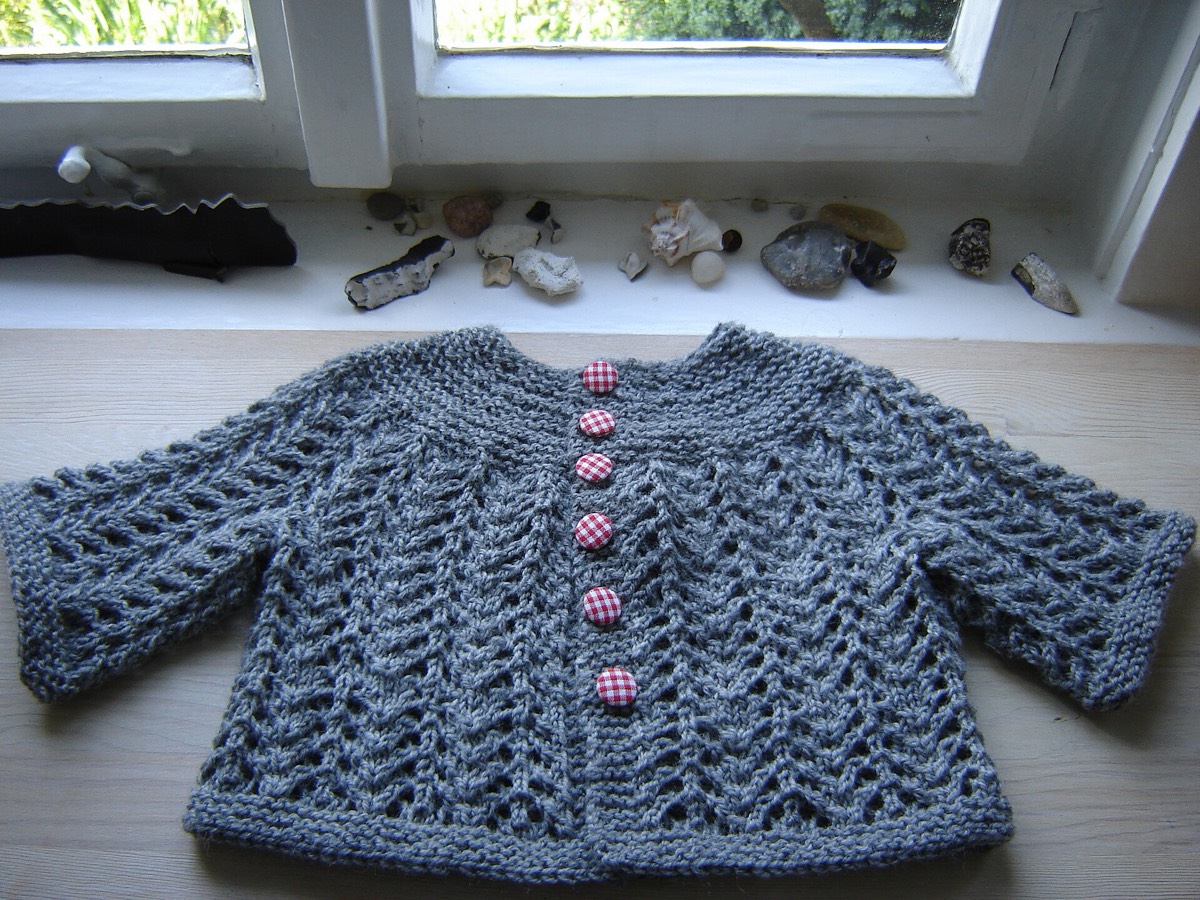

Superwash wool is wool that has been treated to resist felting. The treatment makes the yarn machine washable, which is why it dominates baby garments, socks and everyday sweaters. It also changes the fibre: superwash wool can stretch, grow and lose some of the memory that makes untreated wool so forgiving.
It is still wool. It is not indestructible, and it is not the same as untreated wool.
What the treatment does
Wool fibres have scales. In untreated wool, heat, water and agitation can make the scales lock together into felt. Superwash treatment removes or smooths the scales, or coats the fibre with a resin, so the fibres slide instead of locking.
The result is machine washable — and slippery. Superwash garments can stretch in the wash and grow when hung wet. The label may say “machine wash”, but it rarely says “will not grow”.
Gauge and washing
- Swatch in the pattern stitch.
- Wash the swatch the way you will wash the garment.
- Dry it flat, as the label instructs.
- Measure again; superwash often relaxes and widens.
- Use the washed gauge for the project.
A worked example
A superwash swatch measures 20 stitches per 10 cm before washing and 19.5 after. On a 100 cm body, that is about 2.5 cm of extra width — enough to change a fitted garment.
If the swatch grows more than a stitch per 10 cm, consider going down a needle size or recalculating the size. Do not assume the unwashed gauge will survive the first wash.
Ribbing and seams
Superwash ribbing can relax more than untreated wool. A cuffs or neckband may lose some grip after washing. A smaller needle for the rib, or a rib with more elasticity, can help.
Seams should be firm but not tight. Superwash is slippery; a loose seam can gape. Block the finished garment to settle the seams.
Care
- Follow the label: machine wash cool or gentle, low spin.
- Do not tumble dry hot; heat can shrink or distort the fabric.
- Dry flat, away from direct heat.
- Do not hang a wet garment; the weight will stretch it.
- Use a wool wash or gentle detergent; avoid harsh enzymes.
When to choose untreated wool
If the project depends on memory and recovery — socks, fitted cuffs, structured garments — untreated wool or a wool/nylon blend may hold shape better. If easy care is the priority, superwash is the practical choice.
Why it stretches
The treatment reduces the fibre's natural grip, so the yarn slides more in the wash. That is why superwash garments can grow even when the label says machine wash. Support the wet garment and dry it flat.
Felting and pilling
Superwash resists felting, but it can still pill: the fibres are slippery and can work loose under abrasion. A tighter spin and a blend with nylon improve durability.
Blends
Superwash wool/nylon is common for socks; superwash wool/acrylic is common for baby garments. The blend changes the stretch and the care, so read the label.
“Machine washable” is not “shrinkproof” or “stretchproof”. If the label says machine wash but not tumble dry, the dryer is the risk. Superwash wool can still shrink or distort under high heat. Hot water is the other risk.
For a fitted garment, wash the swatch and hang it for a day before calculating the length.
Limits
Superwash is a treatment, not a fibre. Two superwash yarns can behave differently depending on the wool, the treatment and the spin. Swatch and wash the actual yarn; the label is a starting point.
Check the label and wash method, then follow the hand-washing guide for the first wash.