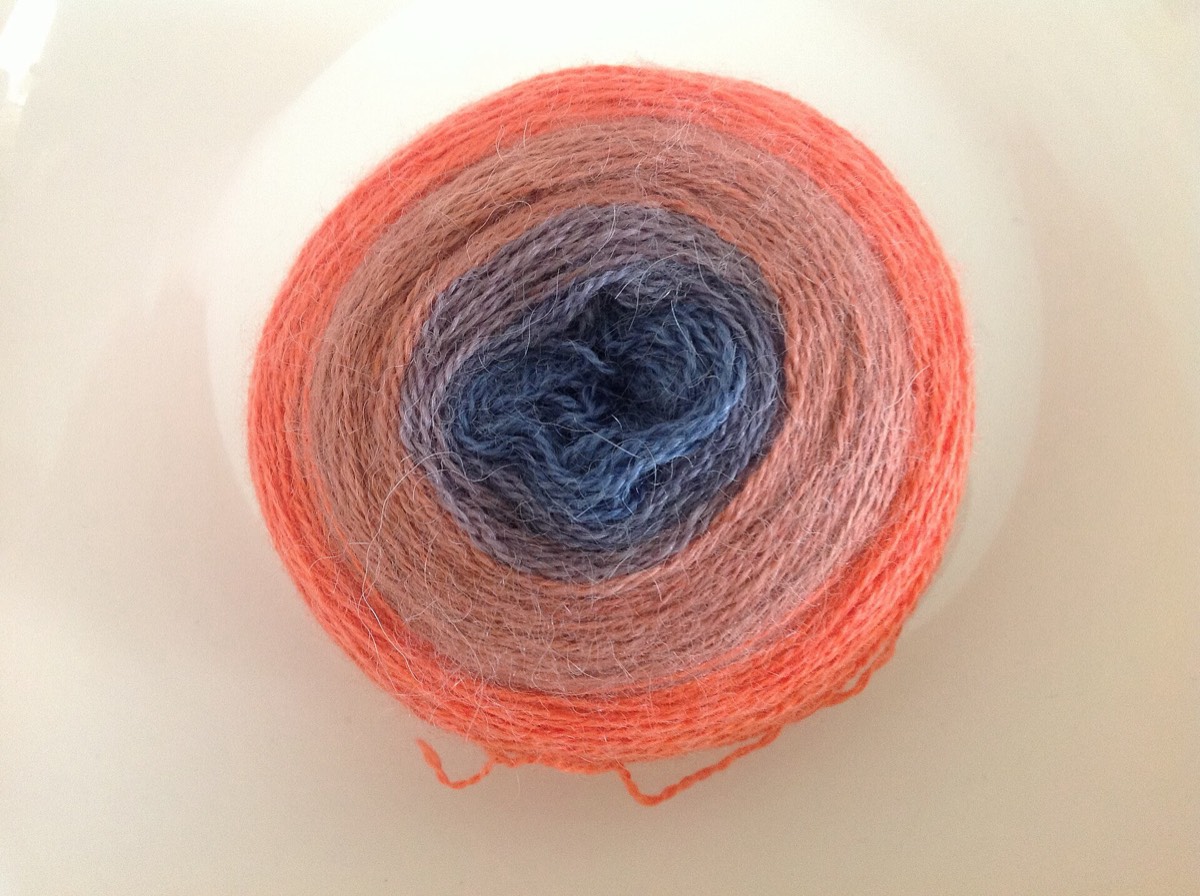

Alpaca, mohair and cashmere are sold as softness, and they are all soft. They behave differently in a garment: one drapes, one haloes, one is delicate. The price tells you they are luxury fibres; it does not tell you which one belongs in your project.
Think about the fabric you want before you think about the label.
The three fibres
| Fibre | Character | Best for | Watch for |
|---|---|---|---|
| Alpaca | Warm, drapey, low memory | Shawls, loose sweaters, coats | Growth; little recovery |
| Mohair | Halo, lightweight, warm | Lace, shawls, fluffy accessories | Shedding; can feel scratchy |
| Cashmere | Soft, warm, delicate | Scarves, baby garments, fine sweaters | Pilling; abrasion |
Alpaca
Alpaca is warmer than wool for its weight and has a soft, drapey hand. It has little memory, so a garment can grow under its own weight; a long sweater in pure alpaca may end up longer than planned. Blends with wool add recovery.
Suri alpaca has a longer, silkier fibre; huacaya is the more common, crimpier type. The difference is visible in the fabric: suri is sleeker, huacaya is loftier.
Mohair
Mohair comes from the Angora goat. It has a long, lustrous fibre and a pronounced halo. Kid mohair is from young goats and is softer; adult mohair can be stronger and more scratchy.
Mohair is often blended with silk or wool and knitted at a loose gauge. The halo fills the gaps, so a lace pattern can look softer and less defined. It can shed, especially in the first few wears.
Cashmere
Cashmere is the fine undercoat of cashmere goats. It is soft, warm and light, and it pills more than wool because the fibres are short and fine. It is best in accessories and garments that will not see heavy abrasion.
A cashmere blend with wool or silk can keep the softness while improving durability.
A worked example
A shawl pattern calls for a mohair/silk lace yarn. You want a substitute with more drape and less halo.
- Alpaca/silk gives drape and a smoother surface; the halo is reduced.
- Cashmere/silk gives softness and drape, but less warmth and more pilling.
- Pure alpaca gives warmth and drape but may grow more; block and hang the swatch.
Match the length and the gauge band first, then choose the character you want.
Blends and labels
Most yarns in this category are blends. A small percentage of nylon can add strength; silk adds sheen and drape; wool adds memory. Read the percentages and swatch the actual yarn rather than assuming from the fibre name.
Warmth for weight
Alpaca and camel are warmer than wool for the same weight; mohair traps air in its halo; cashmere is warm but light. If you substitute by weight, the warmth can change even when the metres match.
Pilling and shedding
Cashmere pills because its fibres are short and fine; mohair sheds its long halo; alpaca pills less but can grow. A blend with wool or silk can reduce these effects. “Baby alpaca” refers to fibre diameter, not the age of the animal; it is softer and more expensive, but not a guarantee against pilling.
Blends are often the practical answer: a little wool adds memory, nylon adds strength, and silk adds drape. Read the percentages rather than the headline fibre. Two 10% cashmere blends can feel different depending on the other 90%.
Limits
Luxury fibres vary widely by grade. A premium cashmere and a budget cashmere can feel like different fibres. The label may not state the grade. Use the swatch and the fabric, not the price, as the final test.
Read the label for blend and guard hairs, then compare with the halo-fibre substitution guide.