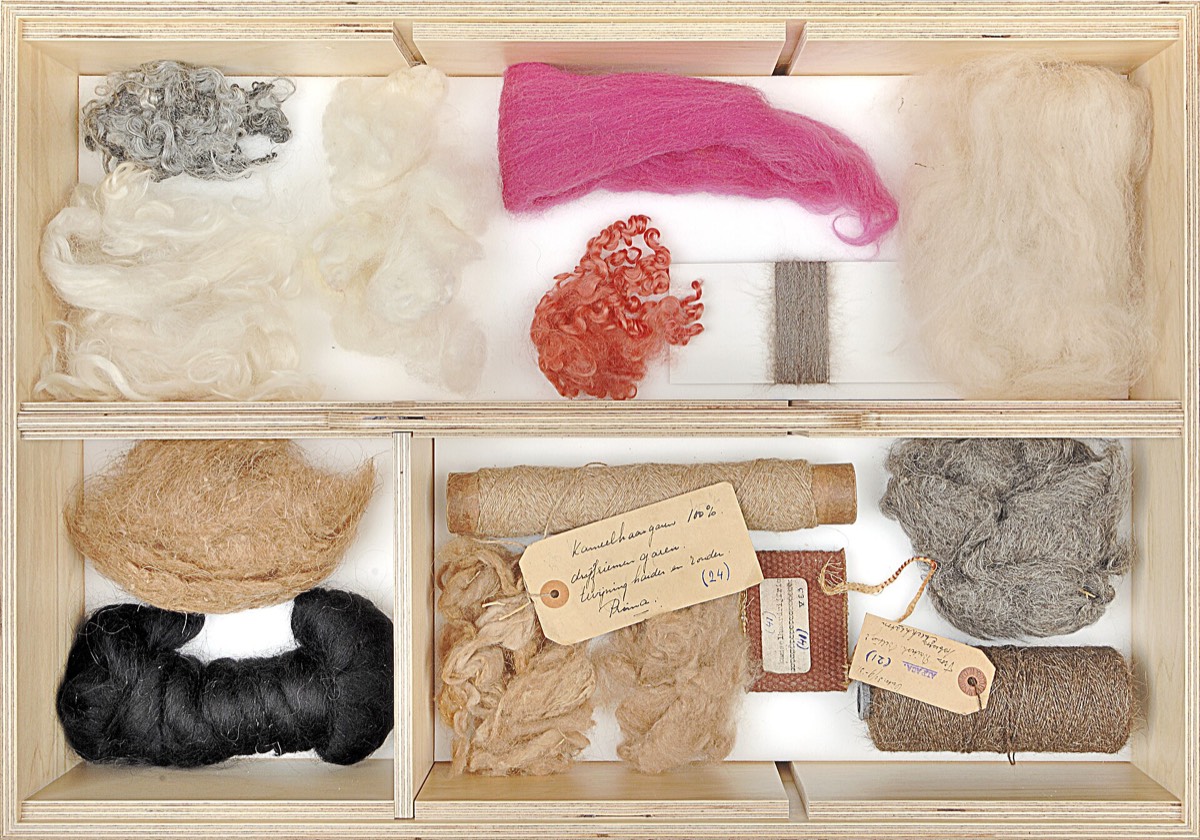

Merino, lambswool and Bluefaced Leicester are all wool, and they are not interchangeable. The differences come from fibre diameter and staple length: fine fibres feel soft against the skin, long fibres add strength and lustre, and the way the yarn is spun turns those fibres into very different fabrics.
Weight and gauge can match while the garment behaves completely differently. Choose the wool for the job, not just the number on the label.
The three fibres
| Fibre | Feel | Strength | Best for |
|---|---|---|---|
| Merino | Fine, soft, next-to-skin | Moderate; pills with abrasion | Baby garments, base layers, fine sweaters |
| Lambswool | Soft, warm, slightly crisp | Good; can pill | Everyday sweaters, hats, mittens |
| Bluefaced Leicester | Smooth, lustrous, less soft | Strong, durable | Socks, cables, hard-wearing garments |
Merino
Merino is bred for fine fibre. The result is soft enough to wear next to the skin, with good drape and a smooth surface. It pills more readily than a long-staple wool because the fine fibres work loose under abrasion.
Superwash merino is common: the treatment makes it machine washable, but it can stretch and grow in water. Swatch and wash before committing to a fitted garment.
Lambswool
Lambswool is the first shearing from a young sheep. It is soft and warm, with a little more crispness than merino, and it is a good all-purpose sweater wool. It is not a breed; it is an age. The fibre diameter depends on the breed behind it.
Lambswool can pill, especially in high-friction areas. A tighter spin and a blend with nylon can improve durability.
Bluefaced Leicester
Bluefaced Leicester (BFL) has a longer staple and a natural lustre. It is stronger and more durable than merino, with excellent stitch definition for cables and textured patterns. It is less soft next to the skin, which makes it a better choice for outerwear, socks and structured garments than for a baby blanket.
BFL also takes dye beautifully, which is why it is common in hand-dyed yarns.
A worked example
You want a close-fitting sweater and a pair of socks from the same weight of yarn.
- Sweater: merino or a merino blend for softness and drape; swatch for pilling and growth.
- Socks: BFL or a BFL/nylon blend for strength and stitch definition; merino alone may wear through faster.
The gauge may be similar, but the fabric and the lifespan are not. The choice is about use, not just numbers.
Blends
Most commercial yarns are blends. Merino/nylon adds durability to socks; BFL/alpaca adds drape; lambswool/cashmere adds softness. Read the percentages and swatch the actual yarn; the name on the label is only the starting point.
Micron and staple
Fibre diameter is measured in microns; lower is finer and softer. Staple length is how long the fibre is; longer staples make stronger, less pilly yarns. Merino is fine and relatively short; BFL is longer and stronger; lambswool varies by breed. The label rarely gives these numbers, but the breed name is a clue.
For high-friction projects, choose a longer staple or a blend with nylon; for next-to-skin softness, choose a finer merino.
Dye and lustre
BFL and merino take dye differently: BFL's lustre makes colours look brighter, while merino's fine fibre can look softer and more muted. If colour matching matters, swatch the dyed yarn rather than comparing photographs.
If you are unsure, choose the fibre for the project's main stress: abrasion or skin contact. A sock needs strength; a baby hat needs softness.
Limits
Breed names describe a fibre, not a guaranteed fabric. Spinning method, twist and ply can make a merino feel crisp or a BFL feel soft. Use the breed as a guide, then trust the swatch.
For the label and care symbols see reading a yarn label; to swap it for another yarn use the substitution method.