
You swatched, you measured, and you are still two stitches away from the pattern. The instinct is to change needles immediately. Sometimes that is right. Often it treats a symptom while leaving the cause in place.
First: check the direction of the error
More stitches per 10 cm than the pattern means your stitches are smaller than intended. Fewer stitches means they are larger. That sounds obvious, but the fix runs in the opposite direction to the intuition: too many stitches, go up a needle size; too few, go down.
A single stitch per 10 cm is roughly half a needle size in many yarns. Two or three stitches is a full size or more. Change one variable at a time and re-swatch, or you will not know what worked.
The variables, in order of likelihood
1. Needle size
The most controllable variable, and the right first suspect when the swatch is otherwise well made. A 0.25 mm change is enough to move gauge by half a stitch; a 0.5 mm change often moves it by a full stitch.
2. Tension drift
Gauge changes with mood, fatigue, caffeine and the time of day. It also changes across a long project: many knitters tighten as they go. If your swatch was knit in a relaxed ten minutes and the garment is being knit over three weeks, the garment may not match the swatch.
Swatch across a few sessions, and measure a second time after a week. If the two measurements disagree, trust the average and expect the project to drift.
3. Stitch pattern
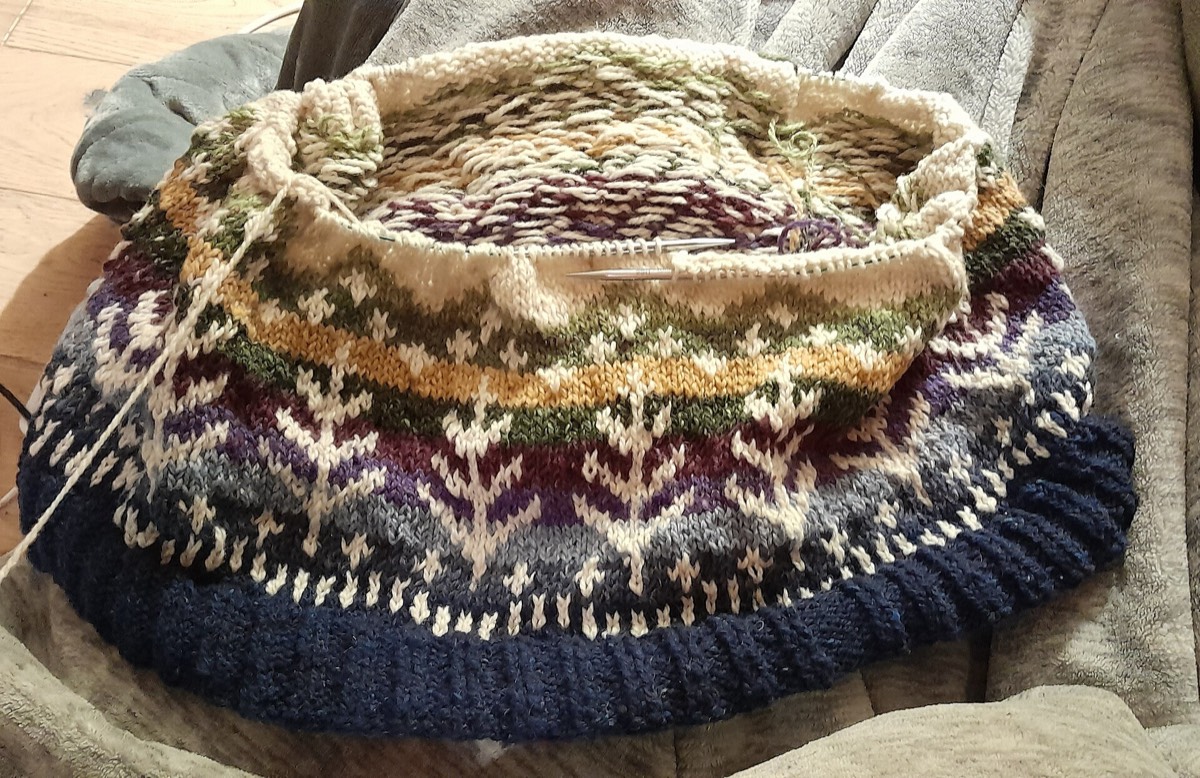
Ribbing pulls in, cables pull in hard, lace opens out, and colourwork tightens. A stockinette swatch cannot predict any of them. Swatch the dominant pattern, or at least the panel that governs the finished width.
4. Fibre and spin
Superwash wool, cotton, alpaca and acrylic all behave differently after washing. A cotton swatch can grow by a stitch or more per 10 cm; a superwash swatch can relax and widen. If you substituted yarn, the original pattern's gauge may simply not be reachable — use the substitution calculator and swatch the replacement.
5. Blocking
Unblocked gauge is not finished gauge. Lace especially can change dramatically after a proper wet block. Measure after blocking, every time.
6. Needle material and tip shape
Sharp metal tips and slick surfaces tend to produce looser stitches for some knitters; wooden needles and blunt tips tend to produce tighter ones. This is personal, but it is real, and it is why gauge notes should record the needle brand as well as the size.
Should you match the gauge or change the maths?
There are two legitimate routes:
- Match the gauge. Change needle size until your swatch matches the pattern. Best for fitted garments and anything with complex shaping, because the pattern's stitch counts stay valid.
- Keep your gauge and recalculate. Best for simple shapes — scarves, blankets, plain sweaters — where you can recompute cast-on counts and lengths. This is what the cast-on calculator is for.
What you should not do is knit at a gauge you know is wrong and hope the fabric blocks out. It rarely does, and it usually fails at the seams first.
A worked example
The pattern asks for 20 stitches per 10 cm. Your swatch gives 22. You want a 50 cm body. At the pattern gauge the body would be 100 stitches; at your gauge, 22 ÷ 10 × 50 = 110 stitches. Knitting the pattern's 100 stitches at your gauge would produce a 45.5 cm body — about 4.5 cm narrower than intended, which is roughly a size down.
Either go up a needle size and re-swatch, or keep the gauge and cast on 110. Decide before you knit the ribbing, not after the first sleeve.
The short version
Change one variable, re-swatch, and measure after washing. If two attempts do not move the number, the problem is probably the yarn or the stitch pattern, not your hands.
Limits
Gauge is a tool, not a target to hit at any cost. A fabric that matches the pattern’s number but feels too dense or too loose will still disappoint. Match the gauge when the shaping depends on it; otherwise choose the fabric you want and recalculate. Two knitters can hit the same gauge with different fabric, because stitch size and yarn behaviour are not the same thing.