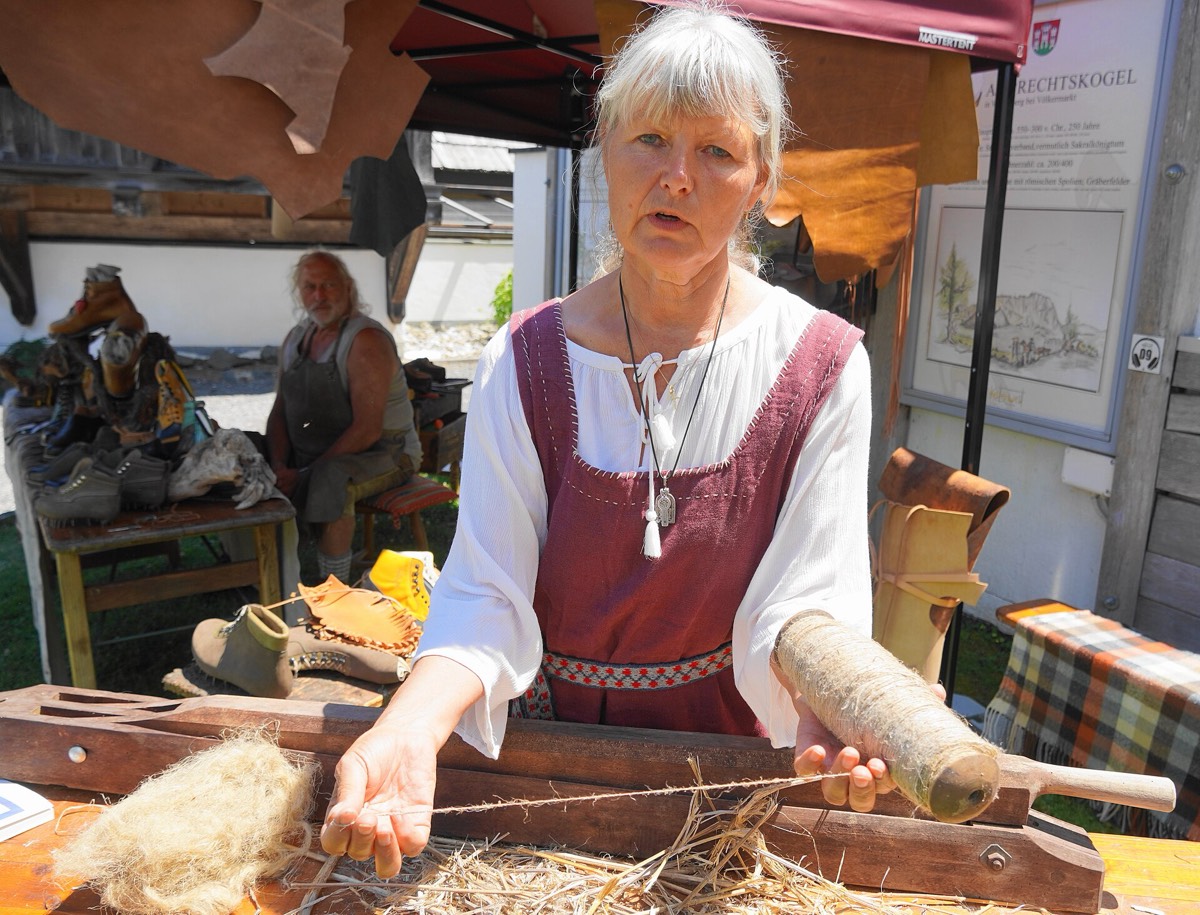

Linen and hemp are plant fibres: strong, cool, heavy and almost completely inelastic. They make beautiful summer garments, but they behave differently from wool at every stage — gauge, drape, seams and washing.
The fibre is not a substitute for cotton, either. Linen is stronger and stiffer; hemp is stronger still, with a drier hand.
What changes
| Property | Linen / hemp | Wool | Cotton |
|---|---|---|---|
| Elasticity | Almost none | Good memory | Little |
| Weight | Heavy | Light | Heavy |
| Drape | Drapes and creases | Holds shape | Drapes |
| Coolness | Cool | Warm | Cool |
| Strength | Very strong when wet | Weaker when wet | Strong when wet |
| Care | Machine wash, may soften | Often hand wash | Machine wash |
Gauge and hand
Linen and hemp feel stiff on the ball and soften with washing. The gauge you measure before washing may not be the gauge you get after; wash the swatch and measure again. The fibre has no memory, so the fabric will not spring back the way wool does.
Because the yarn is strong and inelastic, it can feel hard on the hands during long sessions. A blend with cotton or wool can make it easier to work.
Drape and growth
Linen drapes and creases. A long garment can grow under its own weight, especially when hung. Dry it flat and store it folded. If the design depends on a crisp, held shape, linen may not be the right fibre; if it depends on drape, it is excellent.
A worked example
A summer top calls for 600 m of a linen yarn at 20 stitches per 10 cm. Your swatch gives 22 stitches per 10 cm after washing. For a 100 cm body, the pattern would use 200 stitches; at your gauge you need 220.
Linen may also grow in length after washing. Measure the swatch in both directions, and hang it for a day if the garment will be worn hanging. Adjust the length before blocking, not after.
Seams and edges
Linen and hemp have little stretch, so seams need to be firm but not tight. A mattress stitch works; a loose seam can gape. Ribbing has less recovery than in wool, so a ribbed edge may relax. A folded or faced edge can be more stable.
Care
Linen is usually machine washable and becomes softer with use. Hemp behaves similarly. Avoid high heat, which can shrink or distort the fabric; dry flat or tumble low. Creases are part of the fibre's character; pressing while damp helps.
Blends
Linen/cotton softens the hand and adds a little elasticity; linen/wool adds memory and warmth; hemp/silk adds drape and sheen. A blend can be easier to knit than pure linen, especially for a first project.
Blocking and pressing
Linen responds well to pressing while damp; a steam iron can flatten the texture. Block gently and press on the wrong side with a cloth. Hemp may need more washing to soften.
Yarn quantity
Linen is heavy, so a garment uses more grams than the same metres in wool. Buy by metres and check the put-up; a 100 g skein of linen may hold less length than a 100 g skein of wool.
A linen garment can feel stiff at first and soften with wear; judge the swatch after washing, not on the ball. Hemp behaves similarly but often needs longer to soften.
Limits
Linen and hemp vary in softness by processing and blend. A rough, inexpensive hemp can feel very different from a fine linen. Swatch the actual yarn, wash it, and decide whether the hand suits the garment before committing to a large project.
Check the label for blend and shrinkage, then compare with the wool-to-cotton notes.