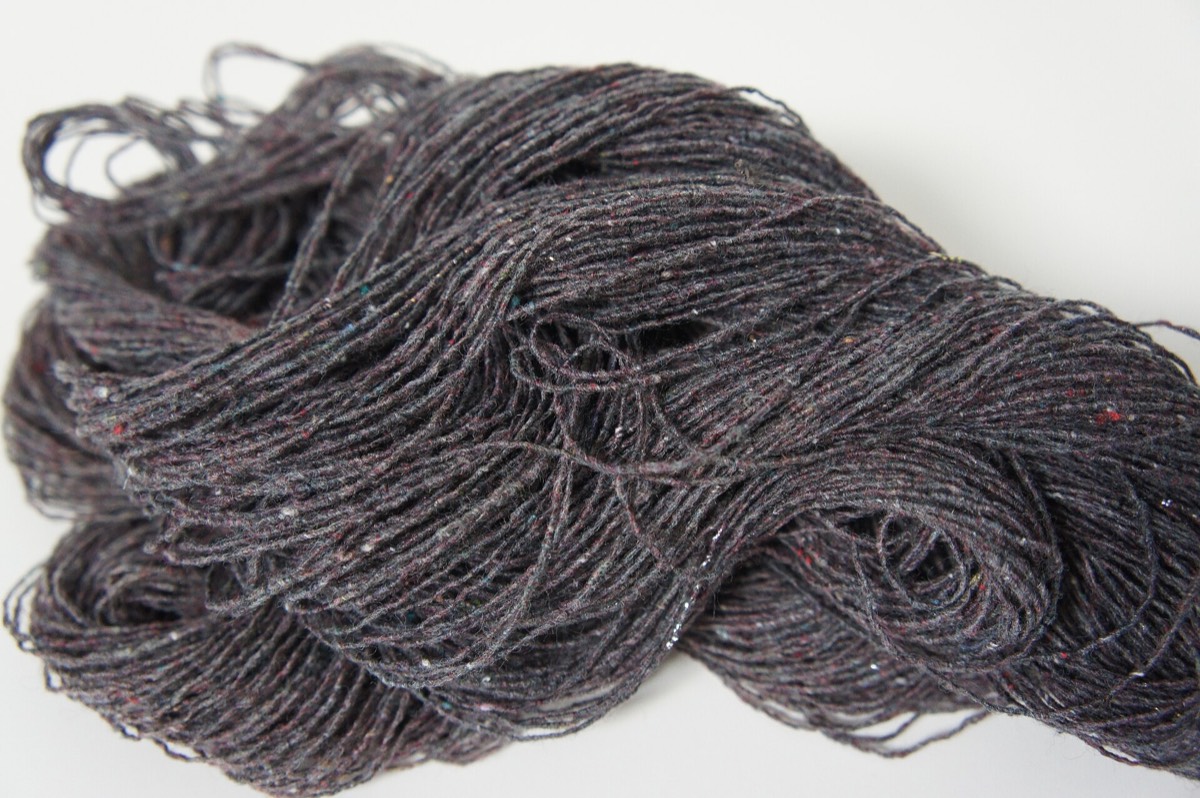

“Recycled” and “plant-based” describe where a fibre comes from, not how it behaves. A recycled wool can knit like wool, a recycled polyester can knit like acrylic, and a bamboo yarn can be a soft viscose rayon. The fibre name on the label is a starting point, not a guarantee.
Read the composition, then swatch. The environmental claim and the knitting behaviour are separate questions.
What the categories mean
| Fibre | Source | Character | Watch for |
|---|---|---|---|
| Recycled wool | Post-consumer or mill waste | Warm, variable, often hairy | Shorter fibres; pilling |
| Recycled polyester/nylon | Plastic waste | Durable, less breathable | Heat sensitivity; static |
| Bamboo viscose | Bamboo pulp | Soft, drapey, heavy | Low memory; can grow |
| Lyocell / Tencel | Wood pulp, closed-loop | Drapey, smooth, cool | Can pill; care matters |
| Linen / hemp | Plant stems | Strong, cool, inelastic | Stiff at first; grows |
Recycled wool
Recycled wool is usually made from post-consumer garments or mill waste. The fibres are shorter than virgin wool, so the yarn can pill more and feel slightly rougher. The advantage is that it reuses existing fibre; the trade-off is variability. Two batches can differ in colour and hand.
Recycled wool is often blended with virgin wool or nylon to improve strength. Check the percentages.
Bamboo and lyocell
Most “bamboo” knitting yarn is viscose made from bamboo pulp, not a fibre spun directly from the plant. It is soft, drapey and heavy, with little memory. Lyocell (often sold as Tencel) is made with a closed-loop solvent process and has a similar drape.
Both can grow under their own weight. A long garment may stretch; dry it flat and support it when wet. They also pill more than wool.
A worked example
A summer top pattern calls for a cotton/linen blend. You substitute a bamboo/cotton blend at the same weight using the substitution calculator.
The bamboo version will be softer and more drapey, with less crispness. The stitch count can stay the same, but the garment may hang lower and feel heavier. Swatch, wash, and hang the swatch before committing.
How recycled content is measured
Recycled content is usually given as a percentage of the fibre, not of the finished yarn. A yarn labelled “50% recycled wool” may still contain virgin wool, nylon or acrylic for strength. Read the full composition, not just the headline.
Mechanical recycling shreds fabric back into fibre; chemical recycling breaks it down further. Mechanically recycled wool is shorter and pillier; chemically recycled synthetics can be closer to virgin. The process matters as much as the percentage.
Environmental claims
“Recycled” and “plant-based” are not the same as “low impact”. Look for specific certifications where they matter to you: GRS for recycled content, FSC for wood pulp, and published supply-chain information. A fibre can be plant-based and still involve an energy-intensive process.
This site does not rate brands on sustainability; the label and the certification are the evidence, not the marketing copy.
What to look for in a blend
A small percentage of recycled fibre can be mostly marketing. Look for a clear breakdown, a named certification, and a description of the process. If the label says only “eco” or “green” without a fibre percentage, treat it as a brand claim rather than a fibre fact.
For knitting, the blend matters more than the story: wool for memory, cotton for coolness, linen for strength, a little nylon for durability. Read what the fibre names on a label mean, choose the blend that suits the fabric you want, then check the sourcing.
Limits
Recycled and plant-based fibres vary widely. A recycled wool from one mill can behave differently from another; a bamboo yarn can be soft or crisp depending on the process. Swatch the actual yarn and treat the category as a direction, not a specification.