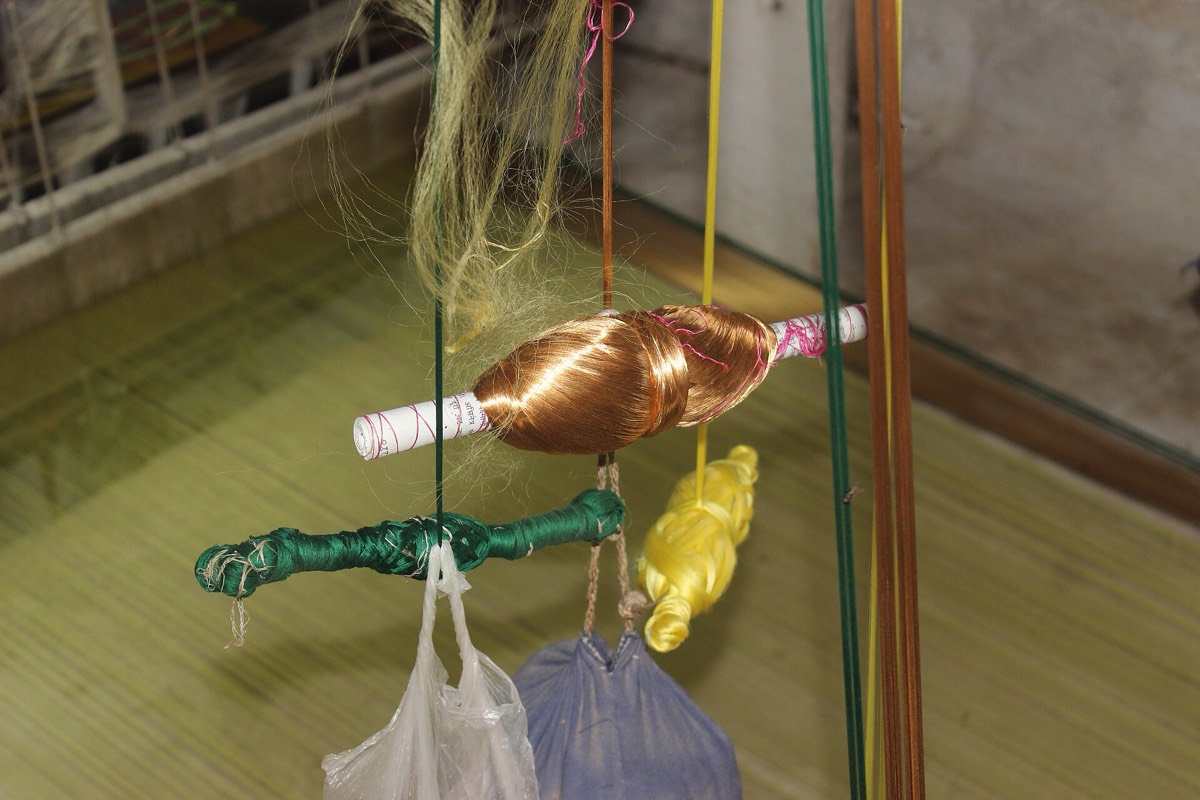

Silk is strong, lustrous and drapey. It is also inelastic, heavy for its warmth and less forgiving of a loose gauge than wool. A pure silk garment can feel cool in summer and warm in winter, but it will not hold a rib or recover from stretching the way wool does.
Silk is often at its best in a blend: a little silk adds sheen and drape to wool, cotton or mohair without taking over the fabric.
What silk does
- Drape. Silk fabric falls and moves; it does not hold a crisp shape.
- Sheen. The fibre reflects light, which shows in the finished fabric and in the stitch definition.
- Strength. Silk is strong for its weight, but it can snag on rough hands or needles.
- Little elasticity. Ribbing and cuffs can relax; seams need care.
- Weight. Silk is heavier than wool for the same warmth; a large garment can grow.
Blends
| Blend | What it adds | Best for |
|---|---|---|
| Silk / wool | Sheen and drape with some memory | Sweaters, cardigans |
| Silk / cotton | Drape and strength with a cooler hand | Summer tops, shawls |
| Silk / mohair | Halo, drape and warmth | Lace shawls, fluffy accessories |
| Silk / alpaca | Softness and drape | Scarves, loose garments |
Gauge and blocking
Silk can knit at a different gauge from wool at the same weight. It has little bloom, so stitches can look more open. Swatch the actual yarn, wash it, and measure. Blocking can change the drape but will not add the elasticity that is not there.
A worked example
A shawl pattern calls for a silk/mohair lace yarn. You substitute a silk/cotton blend at the same length and a similar gauge.
The silk/cotton version will be heavier and less haloed; the lace pattern may look crisper and the shawl may hang lower. The stitch count can stay the same, but the finished object will feel different. Swatch and hang the swatch before committing.
Care
Many silks are hand wash or gentle cycle, and some are dry clean only. Follow the label. Avoid harsh detergent and high heat; silk can lose its sheen or shrink. Dry flat, away from direct sun.
When not to use silk
- Fitted ribbing. Silk lacks the recovery of wool; cuffs and waistbands can sag.
- Hard-wearing everyday items. Silk can snag and abrade.
- Large heavy garments without support. The weight can pull the shape out.
- Projects where a crisp, structured fabric is the point. Silk wants to drape.
Sheen and stitch definition
Silk reflects light, so cables and lace can look sharper in silk blends, while stockinette can look almost liquid. The sheen also shows uneven tension; swatch and check the fabric in daylight.
Weight and growth
Silk is heavy; a long garment can grow. Support the wet garment and dry it flat. A silk blend with wool holds shape better than pure silk.
Dye and bleeding
Silk takes dye deeply and can bleed, especially in saturated colours. Wash the swatch separately before combining it with light colours.
Silk is excellent for shawls and drapey accessories; it is less suited to everyday fitted garments that see abrasion. Silk noil is made from shorter fibres, with a more matte, textured hand than smooth spun silk. It also pills more. Swatch it before choosing it for a large piece. Blocking will not add elasticity.
Limits
“Silk” covers a range of preparations, from smooth spun silk to noil and bourette. The hand and the drape vary. Read the description, swatch the yarn, and treat the fibre name as a direction rather than a guarantee.
Check the label for blend and care, then use the substitution method for drape.